Saturday, 22 February 2025
Letterboxd Reviews #4
Saturday, 25 June 2022
License To Live | Kiyoshi Kurosawa, 1998
Thursday, 18 February 2021
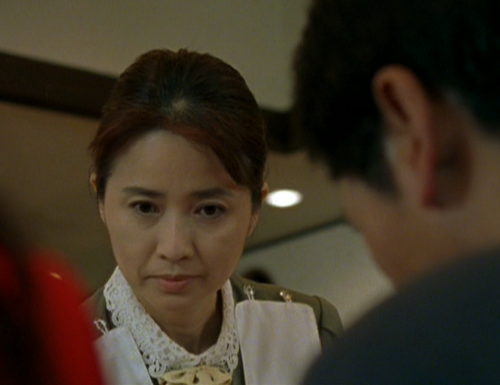
Tokyo Sonata | Kiyoshi Kurosawa, 2008
Originally published 4th May 2015 on my Tumblr. I'm moving some old writing from there over here because it's nice to have it all in one place. It's also nice to look back once in a while.
On the wall of the family home at the heart of Kiyoshi Kurosawa's Tokyo Sonata is a clock emulating the style of a Piet Mondrian painting: a grid, created by intersecting black lines, with a horizontal blue rectangle in the top right corner, and a smaller vertical red rectangle on the left, surrounds a small clock-face in the centre. It appears on screen maybe twice in the whole film, but it stands out as an image of imbalance among the regimented interior design of this typically Japanese home.
Imbalance within a family unit is very much Kurosawa's primary concern in Tokyo Sonata: Ryuhei, a strict middle-manager of a healthcare equipment firm, is suddenly left unemployed after his company relocates to China to cut costs. Too proud to tell his family, he continues the pretence of his daily routine as he searches with hundreds of other men for a new job. As he struggles to find work, he takes his frustrations out on his family: he won't let his young son, Kenji, take piano lessons, or his older son, Takashi, join the US military, and he doesn't tell his wife, Megumi, anything; because of this, his family gradually spirals out of control.
Kurosawa cuts back and forth between these micro-plots (and others, including the younger son's accidental "bullying" of his teacher after he's punished for something he didn't do, and Ryuhei's odd friendship with a fellow unemployed man lying to his family) as they unfold, and, initially at least, they seem relatively unassuming, ending abruptly before they have chance to develop into anything outwardly dramatic. At one point, Ryuhei arrives home late to find his wife asleep on the sofa. He wakes her up and goes to bed, while she's left there, arms raised in search of a husband to help her to her feet. This moment suggests a breakdown in their relationship, but Kurosawa has no interest in drawing attention to its importance: it's the accumulation of these brief moments that makes his cinema so destructive — and when Tokyo Sonata finally goes, it goes hard. The predominantly static compositions of the first half give way to quick tracking shots, while the reserved characters finally show emotion; the cramped offices and houses become vast shopping malls and empty roads, and the episodic structure becomes a parallel narrative, with flashbacks and a dream sequence, as each character tries to escape their own life.
The idea that they need to escape their lives because they've fallen into chaos so quickly is terrifying, if only because it could happen to anyone, at any time, and because it's entirely out of our control. This is the kind of idea that Kurosawa thrives on: in Cure, a detective tries and fails to control an apathetic young man who manipulates people into killing each other, while Pulse presents a world in which a lack of human connection is the catalyst for total annihilation. Both of these films end with their respective problems unresolved, yet Tokyo Sonata ends on a high. At their lowest points, both Ryuhei and Megumi wish they could start their lives over, but the film ends with a moment of familial unity. Enjoying life together as a family is more important than money or pride. The Mondrian clock is never seen again.
Cure | Kiyoshi Kurosawa, 1997
Originally published 19th January 2015 on my Tumblr. I'm moving some old writing from there over here because it's nice to have it all in one place. It's also nice to look back once in a while.
The world of Kiyoshi Kurosawa's Cure is a blank space. Almost entirely interior, the rooms occupied by the unlucky characters are uncluttered and bare, painted off-white and meticulously organised. Posters, the few there are, are geometrically pinned to walls, while the desks and shelves boast small filing cabinets and folders. The only unregimented space in the film belongs to its antagonist, amnesiac drifter Mamiya, whose apartment is littered with books on personality disorders, mesmerism, and psychoanalysis, six month old leftovers and the decomposing corpse of a monkey, tied to a pipe with its arms and legs folded across its body.
Mamiya is manipulating people, who he meets in seemingly chance encounters, into murdering somebody close to them through a form of hypnotisation. His methods are shown in long, mostly static sequences but never explained, and his motivation is never addressed. His odd presence in scenes, nonchalantly luring his victims in conversational circles before stunning them with the flame from his lighter or the slow trickle of a spilt glass of water, stands out immediately as something that shouldn't be there: in his first scene, he suddenly appears on a beach; later, he appears on the roof of a building.
His abrupt appearances make no logical sense, but Kurosawa seems more interested in the idea of how a man like this can exist in such a calm world than trying to explain his actions. Mamiya shows no empathy when his experiments turn people into murderers, as if he's testing his abilities on lab rats, not human beings, and, as the police finally work out who he is, the revelation of his solitary existence suggests a disconnect from both society and basic human interaction — which, in Kurosawa's cinema, is the root of all evil.
Sunday, 1 April 2018
A Collection of (Short) Reviews
Autumn Tale | Eric Rohmer, 1998
The way Rohmer shoots conversations between two people in this is fascinating. Characters talk objectively about their love lives together in a two-shot, before, usually as one of them says something the other doesn't agree with or want to talk about, one of them leaves the frame. The camera stays as it is, leaving one character alone in a shot made for two, while Rohmer cuts to the other in a shot of their own. The conversations continue as if nothing has happened, cutting back and forth between the two shots, and the characters generally reunite within one frame after talking a little more, but the distance between them in these brief moments, however small, feels enormous, suggesting a divide between them that bubbles under the surface of every word they're saying.
An Autumn Afternoon | Yasujiro Ozu, 1962
Calendars and clocks, usually placed right next to each other, seem to take up space on the walls of every building. One of the clocks, in the eldest son's small, modern apartment, needs to be wound to stop it from stopping, and the calendar in the hyper-Americanised bar shows two months on a single page. Ozu isn't just making us aware of time and its passing, but also how indefinite and imprecise time can be. That clock could have stopped hours, days, even weeks earlier, and the date could be represented by any of the numbers on the calendar. The present becomes harder and harder to grasp — an uncertain period between the past and the future, tradition and modernity, men and women, East and West, the old and the young.
The Color of Money | Martin Scorsese, 1986
A retired pool hustler turned whiskey salesman drinks a can of Coca Cola in a practice room after working on his game, as if to embrace the new-school, sugar-rush attitudes that have made him obsolete. His maniacally arrogant new protégé values the short term thrill of a victory over the long term reward of making people believe you're a loser and taking their money when you show them that you're not. There's no time to wait for craft anymore. It's about the rush. Quick money for a quick game. Coca Cola sells by the can while his whiskey fills boxes in storerooms. It doesn't sell anymore.
Homework | Abbas Kiarostami, 1989
A series of very simple 1-on-1 interviews in which Kiarostami (wearing sunglasses indoors, sat behind a desk) asks several schoolchildren about their homework that, collectively, paints a picture of a generation of children failed by education, both in school and at home. As the interviews mount up, patterns begin to emerge: stories of violent schoolteachers, illiterate and impatient family members, the importance of cartoons; and the accumulation of these similarities creates a sense of universality, that education in Iran is failing not just at this school, but across the entire country. Away from the interviews Kiarostami observes life in the school: in particular, a school-wide religious ceremony of remembrance that quickly descends into chaos. The students are asked to repeat the words of a religious song the headteacher is singing, but their attention drifts. They talk among themselves and play with their friends, not because they're disrespectful, but because they have no comprehension of why this ceremony should be respected. Dictation and repetition does not create understanding. Kiarostami emphasises this by silencing their singing ("out of respect for the ritual", an adult perspective), instead focusing on the indifferent, unknowingly offensive behaviour of the students, while the teachers simply continue, seemingly oblivious to the problem in front of their eyes.
In The Mouth of Madness | John Carpenter, 1994
Carpenter's tight framing and slow panning offers a world of potential horrors offscreen, forever out of sight: an unfathomable danger that may not exist, emanating from a place that's impossible to accurately comprehend. A town, not on any map, and only found following a bizarre transportive nightmare, is the source of a demonic plague affecting the readers of a smash-hit horror novel, and viewers of the smash-hit movie adaptation (a lot of people across America (at least)). But is it really happening, or is it a fiction? Nothing is concrete. It's an illogical movie, or one that at least has its own logic: roads impossibly loop back on themselves, people disappear in one place and reappear somewhere totally different. Something is making people do crazy, monstrous things, whether it's real or not. Cultural hysteria or supernatural force: what's the difference?
Lady in the Water | M. Night Shyamalan, 2006
Shyamalan loves closed-off, self-sustaining communities (the farm in Signs, the village in The Village, etc), in which some kind of unfathomable alien threat is closing in from outside. Here, the threat is so strange: a fantasy in real life, but taken seriously to the point that nobody questions it. A water nymph appears in the pool of an apartment complex, and the concern of the characters isn't "who are you really?", but rather "why are you here?" and "how can I help you?" The entire community runs with it, and everyone in the complex has a role that they take without question. Total, unwavering faith. Hearing is believing. Action is never in doubt.
Loft | Kiyoshi Kurosawa, 2005
The stagnation of an award-winning author out of ideas, commissioned to churn out a generic, marketable romance novel and embroiled in a ghost story that may or may not be a fiction. "The eternal corpse," used here to describe a 1000 year old "mummy" preserved virtually intact by the mud of a swamp (mud that the author inexplicably coughs up, as if to reject the idea that preservation of past glories will be any part of her future), could be equally used to summarise a genre that, by 2005, had perhaps run its course for Kurosawa (his only other classifiable horror movie since then, Retribution, was released the following year as part of a J-horror series in the pipeline since 2004). A funeral of sorts, then, and what a send off it is — flitting gleefully between classic Kurosawa accretion of tension and an exaggerated, Twixt-like visual flare (swirling fog on a lake, cartoonish green corpses, incongruous whip pans and fade outs), this bizarrely constructed narrative, complete with flashbacks and dream sequences contained within blurred layers of fiction and reality, is significantly less concrete than its face value suggests. And then there's the devilish ending, only muddying the waters further. A bewildering line in the sand.
Masques | Claude Chabrol, 1987
Perhaps the quintessential Chabrol movie. Makes literal his interest in masks by presenting each character as a false version of themselves, generally used to hide their real, somewhat surreptitious motivations. The match-making for the elderly TV show, with its assertive "applaud!" signs and love-heart number cards being an interesting parallel to this idea of an ever-present falsehood clouding reality — although perhaps a more interesting one would be the game of tennis that the show's host and his biographer briefly play, if only because of tennis's unusual status as a sport in which a player can score more points and win more games than an opponent and still lose the match.
Private Fears in Public Places | Alain Resnais, 2006
Connections based on (literal) divisions: walls, windows, curtains, bars; relationships based on untruths: false names, sexuality, miscommunication, the difference between hearing and listening. If nobody is what they appear to be then nobody really knows anybody, and we're all doomed to be disappointed and alone, with or without another person.
PTU | Johnnie To, 2003
To equates respecting the police to respecting a violent gangster who could kill you for not bringing him a beer quickly enough in a restaurant — and why not, when the cops spend so much of their time covering up their own mistakes and incompetence by planting drugs on the innocent, stealing evidence from crime scenes, and torturing people for information, instead of what they should be doing: solving crimes, catching bad guys; all under a misguided code of brotherhood. The fact that the absurd conclusion is a triumph for some and an embarrassing failure for others is particularly damning — people who slip on banana skins are invariably clowns.
Ready Player One | Steven Spielberg, 2018
The gamification of culture is the death of culture. No new ideas in 30 years, just commodified nostalgia, malleable avatars and usernames; cross-brand fantasies played out ad infinitum. The Oasis is a desert, a cultural wasteland, a "place" that Spielberg seems to simultaneously be wary of and have deep reverence for. Specially designed game suits translate digital sensations to physical ones, but they don't cover mouths and tongues — nobody can tell what's real anymore. A race for extraordinary IRL power quickly becomes a URL war for freedom, fought by regular people wearing VR headsets in the streets of a city but lost in a fake world, going through the motions of punching and kicking and shooting each other without physically connecting with anything.
The Unknown Girl | Jean-Pierre & Luc Dardenne, 2016
Indigestion and vomiting, the benefit of release. Haenel's doctor encourages confession: her patients speak and their illnesses disappear, her ex-intern speaks and becomes a doctor again; but she processes her own guilt in silence, embarking upon a frustrating investigation that she's not equipped to handle while the world around her gets smaller and smaller: a promising career and a dead-end job, a spacious flat and a duvet on an office floor, and a literal hole in the ground that she can't climb out of without someone passing her a ladder.
Thursday, 16 February 2017
Retribution | Kiyoshi Kurosawa, 2006

Retribution | Kiyoshi Kurosawa, 2006
“I felt lonely for so long. Since then, all my senses, memories, and emotions as a human disappeared one by one, and only despair was left at the end.”
The pain of Kurosawa’s ghosts is the perpetual despair of lost love, and an agonising emptiness impelled by the loneliness of the modern world. In Retribution, two ghosts in red dresses embody this pain in oppositional ways: a woman taking revenge on those who she believes killed her through inaction and neglect, and a detective’s ex-lover pretending to be alive to spare him the anguish of her death. One's dress is vivid red, unadorned, invasive; the other's is more muted, emblazoned with red flowers and splashed with the green of their leaves. An evocative emptiness and an imitation of life, a murderous rage and an enduring love. Both are stuck irretrievably in death, and neither can leave life behind — but empty rage can be satiated. Fake flowers never die.
Sunday, 7 February 2016
Seance | Kiyoshi Kurosawa, 2000
A waitress serves coffee to a man sitting alone in a diner. An unplaceable splash of red appears in the corner of the reverse shot, so sudden and so quiet that it barely draws the eye. But, of course, it ultimately does, and when Kurosawa cuts back, the ghostly figure of a woman has inexplicably filled the seat next to the oblivious man. Something that barely registered a moment ago is now impossible to ignore - so now what? Life can never be the same having seen something impossible. Kurosawa's cinema in three shots.